Result templates
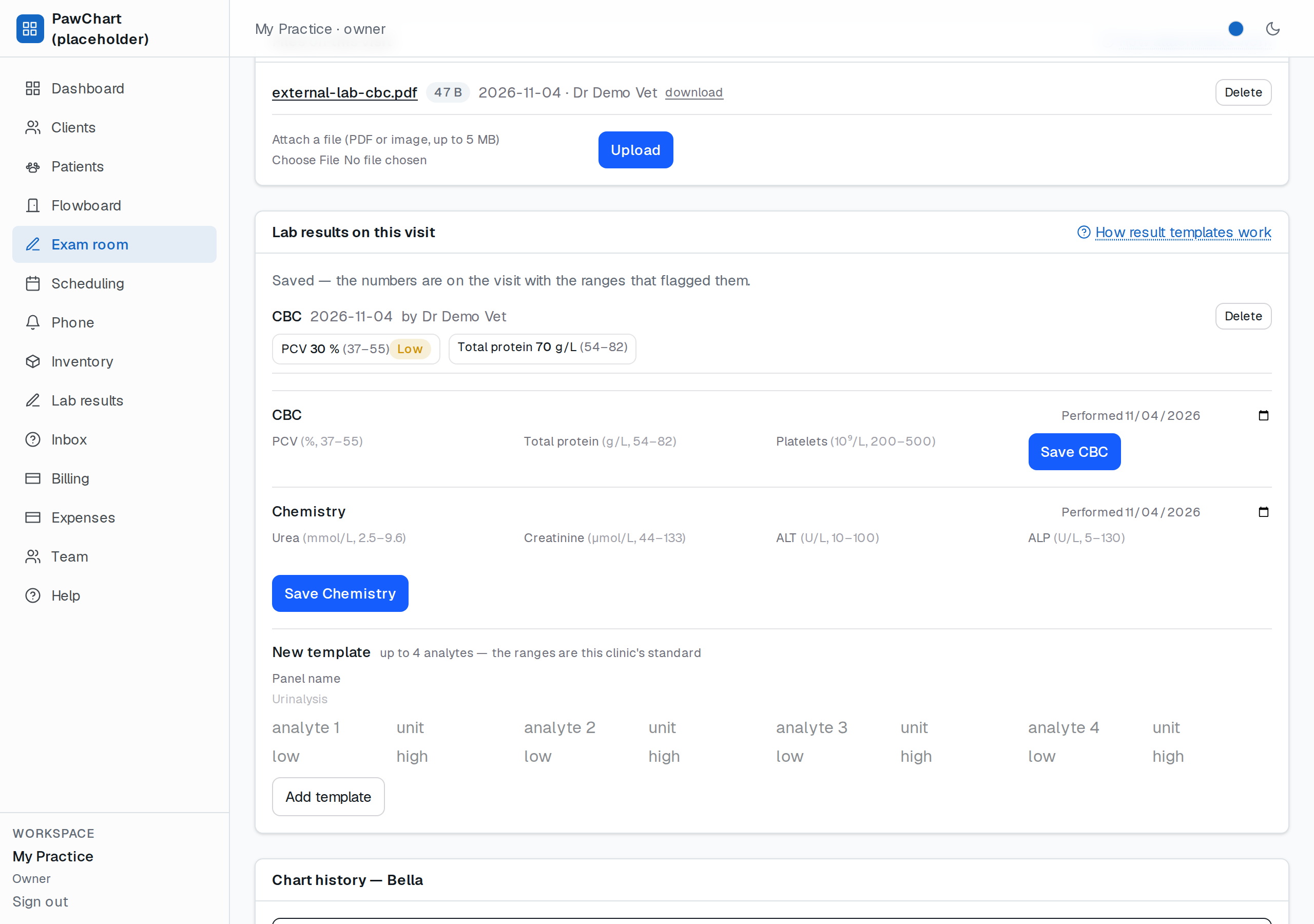
A lab result is not a paragraph — it is a set of numbers that mean something only next to a range. Result templates are your panels (CBC, chemistry, whatever your lab reports) defined once with the ranges your practice works to, then filled in on the visit. The number is stored *with the range that was in force that day*, which is the part that matters clinically: change the practice standard next year and last year's abnormal stays abnormal.
The templates you start with
A new practice gets two panels seeded — CBC (PCV, total protein, platelets) and Chemistry (urea, creatinine, ALT, ALP) — with ranges you can see right in the field labels. They are starting points, not gospel: your lab's units and your own cut-offs are what you actually use, so the card has New template at the bottom for panels up to four analytes. Name the analyte, the unit, and the low and high ends; leave a range blank for values that only have one bound (a "up to" limit like SDMA). A range entered upside down (low above high) is refused — that mistake flags every patient in the clinic.
Running a panel
Open the visit and fill the numbers for the panel you ran. Anything you leave blank is simply not recorded — running part of a panel is normal practice, and a blank is not a zero. Save, and the panel lands on the visit as one entry: date, who entered it, and each value with its range next to it. Anything outside the range is flagged low or high on the spot, in the entry and on the printed visit record — the flag is a prompt to look again, not a diagnosis.
Deleting a result entry removes the entry, not the template; the panel is still there for the next patient.
Why the ranges are stored twice
Every entry carries a copy of the ranges it was judged against. That is deliberate: the template can change (labs re-calibrate, practices adopt new cut-offs) without rewriting history, and an audit of a case two years later shows what *was* considered abnormal at the time, not what the current template happens to say.
Limits, honestly
- No instrument or lab integration yet: the numbers come in by hand (see Lab results for the pointer-and-summary screen for outside labs, and Files on a visit for the lab's own PDF).
- Up to four analytes per custom template — enough for the panels a clinic defines for itself; the big vendor panels arrive with the lab integrations.
- Flags are plain low/high comparisons. Age- or species-specific ranges within one panel are not automatic yet — that is why the card lets you keep more than one template for what looks like the same test.
- No graphs of a value across visits yet (the trend lines come with the reporting work).
Related
- Lab results — the external-lab record when you only get a report.
- Files on a visit — the PDF the lab sent with those numbers.
- Visit record — where the flagged numbers print.